Affichage des articles dont le libellé est CTC Wings Cadet. Afficher tous les articles

mercredi 18 septembre 2013

IR Test... Passed

Friday 6th Spetember I did my last flight with CTC in a light aircraft during my IR test which took me from Bournemouth to Cardiff and back.
I flew the procedural ILS in Cardiff and I got radar vectored for the asymmetric NDB approach back in Bournemouth. The flight went really well, ATC were really nice with me, thanks to my magic call sign Exam 09... so I don't have much to write about! I'm just relieved, happy and also a bit proud of myself.

The last weeks have been really hard in term of pressure. It's hard to know the truth about all of this but it seems that a first serie, first time pass is very important for your airline placement, so I was really stressed to get even a partial, but fortunately I managed to get it done at the first attempt!
 
I can now relax a bit during 10 more days before my AQC starts. I don't know yet if I'm going to do it on B737 or A320, but it's going to be fantastic and a hell of work in both ways! 
Because it's more likely that I'll get a job with EasyJet, I'd rather to do it on airbus to prepare myself for the type rating but who knows!?

lundi 22 juillet 2013

Back to IFR

To begin with, the trip back to Europe hasn't been very pleasant. I had such a great time in NZ, either in flight or during my days off, so I didn't really want to go home. I knew, family and friends were waiting for me and I looked forward to catch up with them but still, I was gutted to go home!

After a week in France, it was already the time to go back to school in Bournemouth to finish the instrument rating phase. The instrument rating phase down here is mainly composed with sim session.
Thomson B737-800 which you can see in BOH.
 We've been told during our introduction day that the partner airlines have raised up their standards meaning that the instructor's expectations have also to be higher. A fail in the test or even a partial doesn't seem to be an option.

The first few sims are called UK Orientation. They are design to get familiar with the UK IFR procedures and the R/T which is slightly different from the Phraseology in NZ. Also, as the airspace is a lot busier here, there are much more frequencies and radio calls to do. It reminds me the French airspace.
Then the following sims are called LOFT. These flights are proper routes between major airports such as Manchester, Birmingham, London Heathrow... The aim of these flight is rather to focus on all the non technical aspects of a flight such as decision making during emergencies, weather diversion...

This part of the training is very demanding, intense,  and not necessary rewarding because when you think you did a good flight, your instructor manage to give you a massive list of points to improve, but it's very interesting! I love it!

lundi 1 juillet 2013

CPLised

This is it... I'm now a commercial pilot!

My CPL flight test has been the most demanding flight I've ever experienced. I had already cancel one flight test due to weather, and the second day, even if the weather was still really bad I decided to go to get it done.
The ceiling was about 1000ft lowering to 800ft at some points so I had to do diversions after diversions to get to my destination, because I obviously had to remain clear of clouds but also keep 500ft from the terrain, which often rises in New Zealand forcing me to make track adjustments to fly over flatter terrains and maintain VFR.

I had hard times during this navigation leg, but I managed to do it safely and legally. The rest of the flight was more conventional with all the general handling exercises and the circuits. I had only two emergencies. One engine fire in flight leading to a full engine shutdown, and one alternator failure.

I did four circuits, one normal, one flapless, one asymmetric go around and the last one was the asymmetric landing for a stop and go with a rejected take off due to a bird strike.

After 2.2hrs, I finally parked the aircraft on the "bravo" stand, took all my belongings and jump into a briefing room to get the good news that I had passed my CPL!

My GPS trace of this flight
I'm leaving NZ in two days, I wish I could stay here a bit longer, but everything has an end... 
The IR training in Bournemouth starts in 14 days so the break will be quiet short. I know it's gonna be really stressfull, but I really look forward to fly in the English's busy sky!

vendredi 7 juin 2013

ILS in Wellington Intl' Airport, NZ

Another thing wich will stay in my mind forever... my first ILS.

I always dreamt to land in an international airport with lot of traffics, half a dozen of frequencies, and where your flying has to be really accurate to meet ATC requirements.

All of that happened yesterday in Wellington, the actual capital of New Zeland. The route down there was pretty straight forward, switching from GPS to NDB and VOR navaids all way down to get finally vectored to intercept the localiser for the ILS LOC DME approach for runway 16.

I flew down there at night, so the 12DME final gave us amazing views over the city and all its lights. Unfortunately the quality of the Gopro is not good enough to reflect the reality but still, this video will remind me this fantastic experience for ever!

mercredi 29 mai 2013

Last NZ IFR sim

I had recently my last sim session, here in New Zeland. It was an IFR route from Hamilton to Auckland and back. 


The flight sequence was pretty straight forward. Departure from hamilton flying a SID to intercept the HN5A STAR, then get radar vectored by Auckland control to intercept the Loc of the ILS 23L for a touch and go and back to Hamilton via H211 to join the 12DME arc for a NDB DME 18L.

The departure was fine, smooth, I was ahead of the aircraft, but just before I changed frequency from Christchurch control to Auckland control, all stations received a sigmet, severe icing and severe turbulence in Auckland area. 
I then listened Auckland Atis on 127.8 and the weather was deteriorating and the wind was builting up to G45kt. The cloud base was OVC001.
I knew already I wouldn't get visual before and at DA (223ft), but I decided to give it a try. I intercepted the Loc, configured the aircraft as we got closer to the glideslope and flew the ILS App for runway 23L fighting against the turbulences. As expected I didn't get visual at the Decision Altitude of 223ft.

"DA not visual, missed approach", I switched the ILS frequency to the VOR frequency to fly the missed approach, got on track and told the control I was established on the missed approach. Auckland Control asked me my intentions and I took the decision to divert to Hamilton where the weather was supposed to be better. I was then cleared to cancel the missed approach when passing 2000' for a left turn on track to the airway H211.

When I was established on the H211, I changed to Christchurch control on 125.3. They asked my intentions, and I requested a NDB DME approach via the 12Dme Arc. I then briefed my self on both the Arc and the approach. 
While I was briefing I got an ECU/A failure I decided to switch from "ECU Auto" to "ECU B" but my instructor told me at that point to check in the QRH. I realised that I had made a mistake I then followed the QRH for a ECU failure and everything went back to normal. 

Instructor 1 - Student 0 

This process took all my brain resources when I should have checked the DME distance to turn to join the Arc. But I didn't. When I realised how close we were I turn immediately and I ended up at 11.7DME. Not too bad but it could have been better.

I was figuring out a correct heading to compensate for wind and to come back on the exact 12DME Arc when the instructor decided I wasn't busy enough and failed my left engine (the critical engine in a DA42). The most important thing is to fly the aircraft then deal with the engine failure. 

By the time I finished with the EFATO drills I was passing the lead radial. I intercepted the final approach course of 184° and made a PAN PAN call to let the control know that I had an engine failure. I was approaching the Minimum Decision Altitude of 550ft but I was still in IMC.

"50ft prior MDA, not visual, missed approach". We were established on the missed approach performing between 150 and 200ft/min, when I lost the ADF. I made a radio call to inform them that I wasn't able to fly the missed approach and requested radar terrain to join the VOR hold.

Few minutes later I was established in the hold at 3000ft, and briefed my self for the VOR DME approach for 18L. Few seconds after beacon outbound I lost the DME, so I switch to the VOR plate and activated the timer. 
During the approach my instructor asked me to check the circuit breakers, and two of them were popped out, my ADF and my DME.

Instructor 2 - Student 0

I became visual at 700ft and waited my committed altitude to select the landing flaps. Over the threshold I got a left engine fire warning. I tried not to get distracted by the warning and landed the aircraft, and then dealt with the fire.

The screen freezed and the instructor told me to shut everything down. That was it, a very intense 2 hours sim session!
The instructor was pretty happy with what I did. He told me I could have been more fluent with the electrical failure though.

I remember few years, or even few month, ago when I was reading some other blogs I had no idea about all of these specific terms to IFR, what were all the procedures, how mentally busy you could be in a N-1 approach... But know I'm so glad to get the big picture. I know I still have a lot to do and a lot to learn, but there are some flights or sims after which you can't be more convinced that you really want to become an airline pilot.

mardi 7 mai 2013

IFR training

Nothing much to say these days, except that the training towards my CPL/IR still continues...

The last few weeks have been dedicated to IFR training either in a DA42 sim or in a C172 G1000, to learn the basics of IFR, ie, R/T, procedures, in flight managment... 

The last news is that the single engine phase is over. I've done my last IFR Cessna flight yesterday. I was flying with another cadet so we did a 5hrs flight. I flew from Hamilton to Whakatane for an Rnav approach, did a touch and go there, and flew to Gisborne for a VORDME approach. Then the other cadet flew from Gisborne to Napier and back to Hamilton. 

As the instructor said at the end of the flight, we felt like we had done a Sydney-Singapore...

The next few flights are going to be in the DA42 VFR to learn how to handle it in normal operations and with One Engine Inoperative (OEI), also called asymmetric flight.

The DA42 is a more complex aircraft with a lot of electronics, so the challenge in the first place will be to learn the systems, but also all the checklist and all the differents speeds. There are about 20 speeds to remember.

I reckon that, "Flaps up, Gear up", "Dead leg, Dead engine", "Approach flaps, commited to land", "Gear down, three greens" are going to be my new leitmotif.


Napier


8000ft, on top

lundi 8 avril 2013

Knitting...The art of dealing with needles!!

I started the IFR phase 3 weeks ago withs 2 days of grounsdchool followed by the first 6 sims. What can I say about it except that there is a massive gap between VFR and IFR training. At the beginning I was struggling about the sequencing of what to do and when... Now it's getting better, but there are still a lot of stuffs to do. It's really hard, but in the mean time very interesting...Basically I'm enjoying it!

I'm really happy to do the IFR before the CPL, because as we need to be more precise with the checks, the paperwork and the actual flying of the aeroplane, I think it's a good way to reach the CPL standards.

The first sim has been design to get familiar with the Garmin 1000. No more conventional instruments, we can now watch the last episode of Game of Thrones on these two screens while flying!

DA42 cockpit fitted with G1000
So far, we learnt how to fly a SID, a STAR, a VORDME approach and a RNAV approach, adding on each flight something new like the checks, the radio calls...

The Standard Instrument Departure, or SID, is basically as we can guess, a published standard departure using a navaid. We can also see wich climb gradient we will have to use to stay clear of terrain... In Hamilton, the TAYLA 2 and BUDEN 1 departure are the most commonly used as they correspond to the active runway QFU, 176° and 356°, so we have to fly straight when airborne.

Hamilton SID
The VORDME and the RNAV approaches are pretty similar except that they use differents nav aids. In the first case it's a VOR and a DME and in the second case it's the GPS. All the approaches seem similar because obviously they've got the same aim, make the aircraft descending while clearing you from the ground and obstacles such as mountains, hills...

Because they are non precision approaches, they take you down to a certain altitude, the MDA (Minimun Descent Altitude) where you should be able to see the runway to finish the approach visually... 
If you're not you shouldn't go below this published altitude and initiate the Missed approach procedure (basically the IFR name for a go around, but following a specified track up to a certain altitude)


A STAR, or STandard ARrival, is the transition between the en route phase of the flight and the final approach. It's only a sequence of waypoints you have to fly by or fly through. I only practiced a RNAV STAR, and in this case the hardest part of it was to load it on the G1000 while flying the aircraft...

Rnav STAR for 18L

I still have a lot to learn, but I really like IFR. I don't know wich one I prefer between VFR and IFR, because there are too many differences, but when I remove the hood in flight to fly the aircraft visually for few minutes, it's like holidays...


jeudi 14 mars 2013

Progress Test 1...

- What do you think about the flight?
- To be honest, I think it was crap!. I know I could have flown more accuratly!
- Well, it's good you're not the decision maker then, because for me it's a pass. No issues at all, but we will discuss of the flight in the briefing room. I'll meet you there in 5 minutes.

That was the discussion between my examiner and I while I was refuelling. 

The PT1 includes a navigation part, a diversion, some instruments simulated flight under the hood and some general handling...

The funny thing about this flight was my go around... I now have around 160 flying hours and this one was only my second one... Not because all my approaches are all the time spot on, but juste because it's still a hard decision to make, and I'd have thought specially during a flight test.

But yesterday, with the thermal activity of the paddocks on final it was hard to fly the correct profile and I didn't even think about it... I just went around.
When I was upwind after this go around I was pretty sure to get a partial for this flight because of this, but actually during the debriefing the instructor was almost happier of my go around than the other circuits I had flown.

Anyway, I passed this flight wich means that the single engine phase is finished. I'll continue to fly the Cessna for 6 more flights for the basic IFR training and then the twinstar DA42! I'm really look forward to it.

The end of the single engine phase also means the end of my challenge about the 30 airfield I had to land on... I failed it. I landed only on 22 of them. Three times the cloud base was not good enough to clear the terrain so I needed to divert from my initial route...


New aerodrome are going to be add to this map because I chose not to fly to certain aerodromes because I knew I would go there in Twinstar, so I prefered place I knew we wouldn't go on DA42. Either very narrow runways or grass runways...

Anyway, It was a great pleasure to flight VFR in this environement. I'm curently editing my last solo navigation video where I went to Great Barrier Island.

mardi 26 février 2013

CPL Qualifying Cross Country Navigation


Finally I got the time to edit my 70Go rushs...

I did this long nav the 10th of February. My route was to fly from Hamilton to Cape Reinga with landings and touch and goes at Parakai, Whangarei, KeriKeri, Kaitaia, Kaikohe.

Cape Reinga is the Northest point of New Zealand. I wanted to go there because it's said that, from the air, you can see the line where the Pacific Ocean and the Tasman sea meet with each other...

Unfortunetly, CTC told me that it was too far. Actually It'd have added 1.2hrs to my 5.2hrs navigation, and as student I can't fly more than 6hrs a day...

Even if I didn't get there, this fly was great anyway because I flew over so many iconic scenaries like Bay of Islands, Ninety miles beach and Auckland City center... Flying at 900ft with the sky tower at my wing tip will stay in my mind forever!

The first progress test ( like a PPL) is not to far away as I have only 7 flights left before the exam. This exam will also be the conclusion of the single engine phase, as we will start to fly on the multis really soon. I'll try to keep flying with a single engine though, because I don't want to forget my VFR skills for the CPL...

Anyway here is the video of this flight!

mercredi 13 février 2013

Personal Altitude record

Mt Ruapehu
So far, my best flight ever...

I was supposed to do a classic 2.5hrs nav from Hamilton to Taupo, Turangi, Taumarunui and back. But that morning, the instructor in charge to sign me out for this flight, told me that it was a pitty that I haven't planned to fly over Mt Ruapehu only few minutes south of Turangi.
He suggested me to go there, because the weather was perfect. No clouds, almost nil wind...

He briefed me, gave me a survival kit and that was it...

Mt Ruapehu is the highest volcano on the North Island.  Its high is around 9,500ft, so I had to climb up to 11,000ft. This was an absolute amazing experience. The view of the lake was stunning. The lake is acid, and to be honest I don't know if I was hallucinating or not, but when I was overhead I could feel that my nose was itchy... 

Was it caused by the acidity of the lake or my imagination knowing that the lake was acid? I probably would never know!

Anyway, Lake Taupo, Mt Ruapehu and Kawhia Harbor were amazing from the sky. As soon as I landed I thanked the instructor for this amazing suggestion.


The next step will be my CPL cross country qualifier navigation. A 300nm minimum navigation. I've planned to go top north of the North Island to see ninety miles beach, bay of islands, etc...

jeudi 7 février 2013

Second (proper) navigation


Why proper? Well, in my opinion a navigation is a flight where you take off from A to fly and land to B. And so far, I had flown only solo navigations with turning points without any touch and goes or full stops.

But I'm now allowed to do so, since the last dual navigation, called "Triangle of death" by most of the cadets. The route is Hamilton - Rotorua - Tauranga, three D class airspaces.

The purpose of this last dual navigation is to make sure that the cadet is able to fly correctly the published arrivals and departures procedures with good radio calls. To make it harder, we are wearing a hood which allows you to see only your instruments. Obviously the hood is removed for all the joining procedures.

Thanks to my previous flying experience, I didn't find this nav really hard, as I had always prefered controled airfields than uncontrolled.

For my first proper nav, I've been up to Coromandel Peninsula to do two touch and goes at Pauanui Beach airfield and Whitianga airfield. 
I was really upset because I had forgotten my cameras, and it was absolutely fabulous, specially Pauanui Beach. This strip is open for general aviation without permission of the operator, but it looks like a private strip as the short grass runway is stuck between to houses lines with many aircraft in their back gardens. 
The airfield is located on a small peninsula, so on both approaches the final is over the water, simply amazing to fly in a such environement.

Coromandel Navigation - Pauanui Beach, Whitianga
For my second nav, I decided to go back to Rotorua because the joining instructions make you fly over the water which is stunning.
I also decided to challenge my self for my training here in New Zealand and I have decided to try to land on 30 differents aerodromes. It's probably going to be hard but still, I'll try.
So, during the nav preparation I was looking for aerodromes not too far, when another cadet suggested me Opotiki. I then decided to fly from Rotorua to Opotiki and back to Hamilton. Because Whakatane, was really close from Opotiki, I decided to do a Touch and go there, to improve my workload management.
There are only 10' or less, between these two airfields, so I thought it would be interesting, because you're quiet in a rush, for your arrival briefing, fly the aircraft, but you have to do it well...
Everything went well, and I flew back to Hamilton.

Hamilton - Rotorua - Opotiki - Whakatane - Hamilton
The next step is another 2 hours navigation and then my 300nm cross country which is a requirement for the CPL. I'm still hesitating for the route of my cross country navigation between an Notherly route towards Bay of Island, Cape reinga, and a Southerly towards Wellington and its international airport...

mercredi 30 janvier 2013

Second solo Navigation


A high pressure system has settled in over the North Island, so I'm pretty much flying everydays and I won't complain!

I've done 5 navs so far, 3 with an instructor and 2 by myself, and it's absolutely amazing!!
It's a real pleasure to fly over a such country. There are not many cities, like in Europe, but because of the terrain, the coasts, all the bays, all the different harbours... It's really hard to get lost.

In an other hand, with a such beautifull weather, and the quantity of obvious ground features it's sometimes hard to stick with your flight log as you can see from the beginning of the fly your destination hundred kilometers ahead. 
Most of the time you just want to fly visually rather than flying headings, but the CTC policy is strict, we are here to learn a method so we have to fly our headings even if we made mistakes on the ground during our preparation.

This is my most common reproache from my instructors:

FI: "Stick to your plan Erwan"
Me: "Yes, but I can see already that we're slightly off track"
FI: "Doesn't matter, stick to what you planned, you'll correct it later on"

Anyway, for my second solo nav I had the choice between flying the reverse of a nav I did with an instructor a plan a new one. Of course, I planned a new one because I wanted to see other things! The off blocks time was 7.45am, with a reporting time of 5.45. I woke up at 4, to get enough time to prepare my route. I was tired, but I did worth it. The light was absolutely amazing, the wind was calm. I couldn't have excepted better conditions!

My route was Hamilton-Karapiro-Waihi Beach-Port Waikato-Raglan-Hamilton:


jeudi 24 janvier 2013

First Navs

Here we are... The navs have started!

Olotea Harbour
I've done already 2 small navs. The first two navs are dual, followed by two solo navs which means that next time I'll be exploring NZ solo...

HN-Karapiro-Kopuarahi-Raglan-HN
The first nav is an easy one just to become familiar with the CTC procedures concerning navigation planning. Hopefully during this nav, the wind would be slightly different from the forecasted wind and you would then learn the standard closing angle methode. A very efficient method when you're experiencing a drift which leads you off track.

This method is pretty straight forward:

Let say, your heading is 360°M but your ground track is 005°M. It means that the track error angle is 5°. 
When you find it out, you have to measure how NM off track you are, using your thumb or any other finger you know the lenth in NM. In this example you are 5NM off track.
The first thing to do is to kill the error. You'll then fly on the 355°M heading which will make you fly parrallel to your ground planned track.
Then, you will fly to an heading of 30° less, so 325° during 5 minutes. 5 minutes because you were 5NM off track. If you had been 2NM off track you would have flown on 325° for 2 minutes.  When the 5 minutes are elapsed, you can go back on your planned heading, 360°M.
Easy method but really efficient and helpfull.

HN-Karapiro-Kinloh-Taharoa-HN
The second navigation is supposed to teach you how to divert on a correct heading with a good ETA. The method taught is quiet easy while you are confortably seated on the ground but in the aircraft it can be quiet hard to think and make easy calculations.
The method is to choose a point from where your diversion will start. Then you will draw on your map a line joining the diversion point to your destination. You'll at that point be able to determine roughly the True track and then the Magnetic track of your new leg.
Once you've done that you have to figure out the drift you'll experience to select the correct heading and also figure out your new groundspeed to establish a good ETA.

For both heading and groundspeed we use the clock wind method:

Your Track is 005°M and the wind is coming from 350° for 20kt. 
There is a 15° difference between the nose of your aircraft and the wind. We have then to refer to the clock to see how much drift we are going to experience. 15° correspond to a quarter of the wind's strengh so 5. You just find out that the wind will blow you 5° off track to the right. So to fly your planned track your heading must be 360°.

Now for the grounspeed, it's quiet similar, but we have to calculate the angle between the wind and the leading edge of your wing. In this example there is a 75° difference. As previously you refer to the clock. The angle is greater than 60° so you take the entire strengh of the wind, 20kt is this case. Your new groundspeed will then be your TAS minus the strengh of the wind. You'll then be able to caluclate a new ETA.

Raglan Harbour
 Next step: solo navs and also my PPL conversion...

vendredi 18 janvier 2013

100+ hrs!!

It's all about hundreds... This is my 101st post on this blog, to celebrate my 100+ flying hours!


I've been waiting a long time now for this moment! I've reached 100 flying hours during my first CTC local solo flight!
Rendez-vous in another 100hrs for the 200th celebration!


samedi 29 décembre 2012

The pursuit of happiness...

Another day of circuits, and another day of happiness up there...

The circuits today were mental.
There were 6 or 7 CTC aircrafts in the circuit. I've been requested to do a right hand circuit at some point, when all the other were flying left hand, followed by two left rate one orbit abeam mystery creek.
I don't talk about being requested to climb 1200ft before turning crosswind, parrallel landings or being number 2 on final following a Katana on short final waiting for a third aircraft to vacate the runway...

Mental I said! This was an absolute mess, but it was awesome!


samedi 22 décembre 2012

First CTC solo...Complete! [ENG]

After a week or so stuck on the gound I managed today to do my first solo with CTC on the Cessna 172 ZK-JMG. 

Why it's been so long?

Well, to be able to fly solo in NZ when you are a foreigner you have basically to do an English proficiency test. The problem with this test is its cost. Actually the test cost 300$ for a twenty minutes phone call with a person from the NZCAA.

I was pretty lucky because the FCL1.028 I sit in France a year and a half ago gave me ICAO Level 4 which give you the right as a foreigner to fly solo here. The problem is, that before my first solo last week CTC found out that the documents I gave them were not the ones expected by the CAA, because they weren't translated into english. 

As a consequence I've been cancelled three times in a week, and I had to harass the French administration to get the right certificate. It was quiet hard because of the time difference between NZ and France, and also because CTC found out the problem during a weekend which forced me to wait 3 days to get the opportunity to speak with someone of the DGAC in France.

It was a hard week, with a little bit of stress, but as soon as I pushed forward the thrust lever and got airborne, everythings were already behind me and forgotten!

mercredi 12 décembre 2012

10 flights... 1st Solo soon! [ENG]


I've flown 10 times since I'm here. I'm starting to get better with the radio comms, starting to know better Hamilton CTR reporting points... so basically I'm starting to get used to my new flying environment.
Hopefully I'll fly solo very soon, by the end of the week probably. I don't really feel like as if it'll be my first solo, but more like it'll be a check ride with an instructor on an aircraft I never flown before.

Everything is fine but it's psycologically difficult for me. I thought a little bit about it and I think I found an explanation... I've flown before, and even if my experience is really small, maybe even too small to be called experience, but still, I spent 80hrs in an aircraft before CTC.

I always thought that my "experience" would be an advantage, but after 10 flights, I reckon it's not necessary something good for two main reasons.

The first one is that all my hours were flown solo (with friends/family) or with a volunteer FI, who didn't put any pressure on my shoulders. He used to be very listening and talkative, which means that sometimes it happened that we flew only 20' for a circuit lesson because he'd noticed I was tired, and found useless to complete the entire hour. We were flying the aircraft in a safe way during navs or general handling lessons but the first goal, for both of us, was to enjoy to be up there, in the sky.

I still love to fly a plane here in NZ, the instructors are great, really. I think I'm very lycky to get the chance to do what I wanted to do for many years now, but the first goal of your instrcutors here is to teach you how to fly an aeroplane, not necessary enjoy it.
I think I didn't enough prepare myself to get ready to fly not for the fun of it but rather to learn a job.
This way of flying means to have pressure on your shoulders before evry flights because you want to be good, want to get a good marks for your records and maybe get a better job at the end.

I think that if I hadn't flown in France, in an aeroclub environment, it'd have been easier for me to handle this.

The second reason, is my previous experience again... I never thought I was a talented pilot, only a normal one. You fly safely, you know your limits, you know your aircraft, you know the procedures, after the PPL you still fly with an instructor once every 10 hrs to rub out the bad habits, etc...

But since I started to fly with CTC, I've got the feeling to be a poor pilot student. Again, I know that my experience is very small, but still, I thought I knew how to do a circuit, how to flare, how to take off, and even... how to taxi towards the runway... but after all the debriefings I've been given I feel like a beginner with no experience at all. The instructors have something to say on EVERYTHING, which is good AND necessary I know, but sometimes you want the good things you've done to be point out too, like the bad things.

Because a pilot has to make steps backward and apply self-analysis about his competences or situations, I did it. 
I know that I have a lot to learn, and I want really want to!!
But I think I need to be reassured concerning my skills. I never been overconfident about my skills, not at all, and I'm slightly worried, with only the problems point out, to loose my confidence... which is never good.

mardi 27 novembre 2012

First flights... so far so good! [ENG]

Today I had my fourth flight on my new steed, the C172. 


I knew from my previous experience on a C150 at Quiberon air club, that cessnas weren't my favourite planes. I find them way too heavy and not very manoeuvrable compare to the low wing aircraft I was used to fly, and specially my little taildragger F-BPRT.
I also knew that the 172 would become my aircraft for the next 100hrs or so, so I had to forgot my a priori and try to become familiar as fast as I could.

When I first saw the flights sylabus I thought I'd get bored during the first few flights. I knew I was still be able to do medium turns, climb, descent, stall, and so on... 
But to be fair, the instrcutors are really picky. They point out all your mistakes wich forces you to be much more accurate on your altitude, speed, rpm for each phase of the flight, than during my PPL training in France.... I'm pretty sure it's to prepare us to the CPL exam in few months. Since recently I had never flown a whole fliht with 20-50ft accuracy on my altimeter, and to be honest after a such flight you're quiet proud of yourself...because it's not an easy task.

On top of that, they overwhelm you with a lot of mnemonics such as, ALAP, CLEAROF, LOI, HASELL, HELL, corresponding on various checks... Even if I have 80 hrs flying, I have to say that at the end of each flights I can hardly remember my name.

With now around 4hrs on the Cessna, I starting to get used to it. The next step is to be able to readback all the radio calls, because I currently readback 90% of the radio calls so let's get these 10% left!!

Following, a quick film of one of the flight. We'd requested an East departure towards Cambridge, which is not the most beautiful area near Hamilton unfortunetly. It's nice, yes, but not as nice as the west cost with Raglan harbour, the beaches... next time!

mercredi 21 novembre 2012

Rough start! [ENG]

Yesterday, the 20th, was supposed to be my first flight with CTC. I was scheduled to fly one of the DA20, ZK-SFG, off block time at 7pm.


We're not at the aeroclub anymore so for every flight, even for an hour flight with half fuel tank, we have to fill the load sheet. In another word, we have to make sure that the center of gravity (CG) will stay within its limits on the apron at zero fuel mass (ZFM), at take off (T/O) and for landing (LDG).

Then, from the performance graphs in the Aircraft Flight Manual, we have to get the T/O distance. When we got this T/O distance, we have to multiply it by various factors to figure out if the runway we are going to use fits with the performance of the day. 
Because Hamilton Airport has 4 runways, 2 grass runways and 2 sealed runways, you have to take the worse case scenario to make sure you will be able to T/O, which is wet grass runway.

Let's say that you found from the graphs 536m as T/O distance, you will have then to multiply this figure by the regulation factor, to get the take off distance requiered (TODR), then by 1.15 for the surface (grass) and finally by 1.15 for the surface condition (wet).
When it's done you have to do the same for the landing distance. 

The first time I did it, it took me like 45min, that's why your reporting time shouldn't be later than 1h30 before the flight to make sure the paperwork is done before your preflight brief.

Since the beginning of the flight planning I knew that I wouldn't be able to take off with an instructor on bord and full tank. The CG would have been outside its limits, and possibly lead to crash.

Everything was fine, I was waiting for my preflight brief. The instructor had been delayed by the previous cadet, so I rapidly explained to him my concerns about the load sheet figures. For this particular flight it was fine because we didn't have full tank.

We jumped in the aircraft, it was already 7.40pm. We got through the first checks, then we made a radio call to CTC Ops, because they have to be aware of any aircraft movements:

"Us: CTC base, SFG taxiing out
Ops: Roger"

So we taxied to the run up check area, where we basically check the engine condition. We did this last check, it was already 7.55pm, and the instructor told me that we wouldn't be able to fly. He explained to me that there was a CTC ruled saying that we can't land less than 45min before the End of Civil Twilight (ECT), which is when the sun is 6° below the horizon. The ECT on the 20th of November was at 8.44, so we had only 4 minutes to take off and land... impossible then!


We taxied back, and had a quick debrief concerning my load sheet calculations. My flight istructor was a bit concerned too, so he talked to the management departement and they decided to put me on Cessna 172 for the rest of my single engine phase.

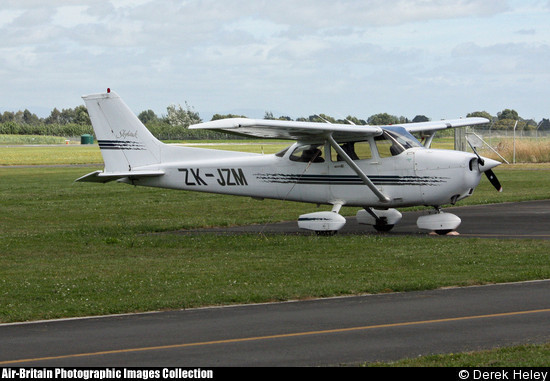
This first flight is re-scheduled for tomorrow on the C-172R ZK-JZM.


A volcano entered in eruption today, in the middle of the Northern Island, I hope I'll climb high enough tomorrow to see the ash cloud! This is going to be fantastic!

lundi 19 novembre 2012

Let's fly... [ENG]


A week after the begining of the groundschool it's already over. We won't complain about it as it was quiet hard to focus on an another phase of grounschool while you see all the other cadets preparing their flights, on the apron doing the preflight inspections....

Why we needed to do another week of groundschool? 

Just because the ATPL theoretical we passed few weeks ago, was under the JAR rules, or should we say EASA, and New Zealand is not ruled by EASA. So, to be able to fly VFR solo later on we had to sit a NZ Air Law PPL exam.

Fortunetly, there are not too many differencies with the rules we learnt during the ATPL. The most significant ones are the Met minima and their airspaces. The Met minima are easier to remember than the european ones and more permissive specially in class G. 

Concerning their airspaces, there are few differencies. In fact they don't have B,F and E class. Also, they created specific zones within a controlled airspace, like the VFR transit lanes. This VFR lanes are basically uncontrolled zones, with lower and upper limits, within a controlled airspace ( CTR, CTA). We've been told that the kiwis don't really like to speak on radio, so this way they can get through a CTR without contact.

T251 & T252, 2 transit lanes North and South of Hamilton CTR

To be fair, compared to the 1/500 000 French navigation chart that I'm used to, the navigation chart of New Zealand is quiet empty, only a few CTR/CTA.

All of this to say that today was my air law PPL exam. This was the hardest exam I've ever taken, much more difficult than the ATPL one. I managed to get 80%, I really don't know how I did it as I was convinced I'd failed.
We had also another exam about ATPL differencies, merging various topics such as Met, AGK, HP&L and Navigation. This one was pretty straight forward so I'm not really concerned about my result which should be send to me by email.

Groundschool is now over til the IFR phase in few months, which means that the flights can start. My first flight is scheduled tomorrow evening at 7pm, this is going to be awesome!!

Let's all of this begin!!!